Thursday, April 12, 2007

And so it goes.


Today I was building a bookshelf, and I found out Kurt Vonnegut died.

Monday, April 2, 2007

Tideland


Richard Roeper and A. O. Scott got together (sans Roger Ebert) to hate Terry Gilliam's new film Tideland. This once again proves what a couple of boneheads they are. Roeper said there was "no real fairy tale" element in the movie. "Real fairy tale"? Does he mean it doesn't contain the Disneyfied version of fairy tale-telling that somehow supplanted the older tradition of grotesque fairy tales in our culturally malnourished civilization? In that case, he's right. Tideland isn't Disney's version of Alice in Wonderland; it's Gilliam's.

A real fairy tale is cold and cutting and factual as death. And that is why fairy tales are beautiful--because they're honest in a way stories aiming at realism somehow cannot be. This is what Gilliam gets right, and why the film is worth seeing. It is also unpredictable, which goes far with me. No guns, no car chases (although there are explosions), and a resolution hard to foresee and yet mythically satisfying. I would pay to see any recent film that pulls off all of that.

Gilliam gets, I think, some things wrong, too, but the movie is certainly good enough for me to recommend it. He flirts with some cliched characters and ideas, the brain-damaged man-child for example, but in the end I think he pulls them off satisfactorily.

I think Tideland is unsafe in a way general audiences could not help but hate; people who have a particular fancy of what a little girl is like will most likely fear it—and therefore hate it—the most. I think the success of Little Miss Sunshine's protagonist could be instructively contrasted with the nearly uniform critical attack on the protagonist in this film; it might help us diagnose our cultural inability to see and understand children (which is why we crank out so many damaged ones).

This isn't Terry Gilliam's best film, but, thank god, neither is it The Brothers Grimm. Grimm was a look at fairy tales and folklore designed to make money, where Tideland is simply art.

See it. My only suggestion is NOT to listen to Gilliam's introduction, which is just a publicity stunt and quite misleading about the nature of the film. I suspect he's joking when he says the little girl is "innocent"—playing on the empty, self-deluding definition we tend to assign to the concept of innocence. Something far more interesting is going on here than edenic childhood bullshit, and I think critics are pissed because they wanted edenic childhood bullshit with a smattering of trendy dysfunction (viz Little Miss Sunshine). This is not neo-Indie Hollywood-approved dysfunction, it's sordid desperation—including such unusual subjects as mummification, necrophilia, incest, child abuse, and sociopathic mass murder.

Elsewhere, I heard Gilliam dryly say, "Children are resilient. Drop them and they bounce." The comment gets to the heart of the film: we're watching a little girl get dropped and seeing how she bounces when she hits the ground. Unpalatable, sure, but good fiction and a good film.

Tuesday, March 27, 2007

Saccadic Changes (without much of anything really changing)


What a difference a week makes.

On Monday, an English teacher at one of the country's most prestigious college-prep schools called. He left a message on my answering machine informing me that the faculty there had considered me for a teaching post last year. That was news to me. I had never sent a vita or anything. All I remembered was meeting him once in graduate school a few years ago. I called him back.

Apparently an old friend, now teaching at another prep school in New England, bandied my name about so much at this school that a contingent formed with the mission of hiring me. It feels strange to have been talked about for the last few years without knowing about it. Anyway, I'm going to visit the school—right here in town—in April. The chair of the English department asked me to give a lecture, tour the school, etc. I think I would enjoy teaching literature again, getting paid for it (not much, to be sure, but a fortune when compared with the near-charity wage of a college lecturer), and finding myself in a stimulating environment for my writing. Still, the whole thing is so odd and unexpected that I'm not sure precisely what to think. I told the chair that I'd also like to coach the cross-country team if it were possible (it turns out that it is possible). Sort of a Garp impulse on my part, I suppose. I've talked with B and my Prestigious Poet Friend in Japan about the job. I'm no less confused, but I am reminded it's good to have friends. (B is easy to talk with, since he lives across the street; conversations with my PPF cost 39¢ per minute because he lives in Kobe, so his advice is more expensive.)

We'll see.

Also last week, I wrote about 5,000 words of a new novel I'm throwing away. Yet another false start. The writing was competent, I think, but if I'm not interested in the protagonist, who the hell will be? I am slowly beginning to realize that writing a draft novel every few months may not be possible for this scribbler. One manuscript per year sounds more reasonable. But maybe not--now I have to consider teaching again, since I fell ass-backward into it. Hm.

Tuesday, I found a good university press that may be interested in the first novel, which is nice. It's a press everyone knows, so their interest strokes my ego just so. Ahh. They will take around six months to get back to me, but I am reasonably certain they'll read the whole MS, at least. And perhaps I can publish without an agent after all. Hope rears its ugly head anew.

And on Friday, I ticked off another year in my early thirties with a fine party. The people were dear, I sampled nine varieties of single malt scotch in a blind test and identified most of them correctly (excellent present B), and I enjoyed having attention and gifts lavished on me (the cake, once again, will live on in legend, M!).

Earlier on the very same day, I found out my nascent kid is perfectly healthy. He will be a boy, weighs the right amount, has properly developed internal organs, and all the rest of the developmental jazz. The temptation is there, of course, to say the news was the bestest pwesent I could ever wish for. Ok, it's true. But to temper the saccharine quality of the experience, I relate for the record: on an ultrasound he looks like Skeletor.

Sunday, March 18, 2007

Step Right Up


James M. Cain is dead enough. I read Postman and now Double Indemnity. I’ve been thinking about how to make a good gutter-American novel with a fastbuck bastard protagonist, so I read Cain. His short stories are great, as I wrote in the last post, but I really wanted to read the two first-person pov novels to learn, I hope, something about how he did it. I also chose Cain, I suppose, because he’s dead.

He’s dead and people still read him. There are plenty of popular writers now living to choose from, of course. Nora Roberts had 5 simultaneous New York Times bestsellers, last I checked. I’m not so sure people will read her books long after her death, though.

Everybody wants to sell. I want to sell. More important for me, though, would be to write books one could read twice or more without becoming bored. I could read Double Indemnity again, no problem. The ending is so beautifully weird. So nasty and poetic.

The patron saint of American writers who toil in obscurity, St. Nathaniel Hawthorne, wrote literature is “news that stays news.” I love that definition. My litmus for books, the ones I read and the ones I write, is always the same: if I can read it twice, and it’s just as interesting the second time, it’s good work. After revision, by my standard, I actually like about 1% of my own work. And I have my doubts about that 1%.

Cormac McCarthy has a bestseller at the moment—The Road. Once I’d finished reading it, all I wanted to do was read his previous novel, No Country for Old Men again. No Country seems a better novel to me than The Road. I want to read it again with greater urgency. Blood Meridian is better still. I read it in one day and night, then got up the next morning with the equivalent of a literary hangover and had the hair of the dog—I read it straight through a second time. I’ve read it twice more in the intervening years, and it’s still as interesting, or more so, each time. I know I’ll read it again in a couple of years. That, to me, is a very good novel.

So I want to write novels people will want to read over again. This much I know for certain. But of course, I have little positive idea what others will want to read once, let alone read again. Do people buying all those Nora Roberts vampire or romance novels read them over and over? Will people read them over and over in 20 years? I have my doubts.

Stephen King, when he complained about the little journals to an audience in San Francisco (see last post), said the writers of the fiction in those journals did not seem to care very much about catching a reader’s attention. He seemed to detect a sort of subtlety for subtlety’s sake that got in the way of writers grabbing a reader by the nostrils and yanking her forward. Ok, so there is a carnival-barker aspect to the kind of writing that sells. “Step right up, laidees and gentlemens, see a world of sex and violence you’ve never seeeen beeefore!” King sure knows about that. But some of his novels are clearly worthy of a second reading, I think. Some of them will last after King is in the ground. Of course, maybe after 50 novels, the odds are simply with him. How does one write novels that not only buy groceries, but turn into gold?

Ah, the alchemist’s stone. What is it? Being prolific, perhaps. Kinging out dozens of novels and getting some of them really, truly right. John Updike falls into that camp. I do not care for Updike’s work, myself, but I know he has written a hell of a lot of fiction and some of it will survive after he’s dead. But then, of course, there’s the J.D. Salinger scenario—only three novels and a book of short stories in fifty years, and everybody still knows his work, and they will continue to know it. William Gass, too. He doesn’t exactly roll them out every year.

The alchemist’s stone—what is it, what is it?

Wednesday, March 14, 2007

Little Journals are Killing Me--a rant


I read The Postman Always Rings Twice yesterday. I love the film noir with John Garfield and Lana Turner, and I enjoyed Cain's novella more (I know, I know--you can't judge the same story rendered in different artistic media, blah blah blah). If Cain is a hack, he is an American hack in the tradition of Edgar Poe. I mean he maps the hardscrabble terrain of alluring psychotics from the first person point of view better than most anybody. To get into the American psyche is to understand a certain type of psychotic (in this case, the fast-buck killer). And, like Poe, Cain definitely makes literature out of a hack's story.

These days I am writing about a (fictional) murder, so I thought Cain would be a helpful detour. I have been having this horrid doubt, however, that the story I am working on will not be "literary" enough. However, I think I traced the source of this peculiar insecurity.

One of the major problems with much of the "literary fiction" being published in the usual little journals (i.e. GlimmerTrain, Zoetrope, and the others Stephen King recently referred to as, "the shit nobody reads") is that the writers are not trying very hard to engross an ordinary reader. What I mean by that is they are trying only to engross other writers of "literary fiction." Gentle humor underlies either a) lyrical intensity (conventional fiction), or b) clever prose styling (metafiction, also known as conventional fiction). Yawn. With subtlety and nuance, fully formed characters make dinner, go shopping, and discuss food in Paris or New York City (I'm looking at the current issues of the two journals named above). Yawn, *stretch*.

Of course, in the shit most people do seem to be reading, in the novels with pink covers and pictures of Renee Zellweger on them, unmarried female characters make dinner, go shopping, and discuss food in LA, London, New York, or Paris. Hm. I guess that makes it "chick lit" and not "literary lit." I haven't read any chick lit other than Jane Austen, so maybe some of the new stuff is literary. It would surprise me if it weren't. Whether it is or not, it won't make it into the little journals.

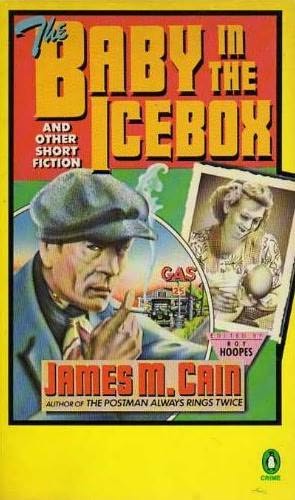
It is as if a narrative in danger of sliding into any genre whatsoever might not get the dubious prestige of being identifiable as "literary." There are, of course, great stories in which almost nothing happens in the sense of a plot (Raymond Queneau's Exercises in Style is a personal favorite), but now it seems that if anything were to happen, it wouldn't be called "literary fiction." It's hard not to blame James Joyce. (Goddamned Dubliners!) Of course, the problem is the strange negotiation publications in the late capitalist era are making to try to capture the diminishing market. The little journals seem to be carving out their niche—something they call "literary fiction." They are, of course, merely smaller businesses identifying a market they want to capture. Zoetrope has the tagline, "The New Generation of Classic Short Stories." Hilarious! Can you imagine a story such as Cain's "Baby in the Icebox" making it into Zoetrope?

I guess one of the problems is the drive on the part of publishers, even publishers of the little "literary" journals unread except by other writers, to market their product. What is "literary fiction" as distinct from all other genres supposed to mean, anyway? Can you imagine dear Ray Bradbury trying to get his start now? He'd be pegged as hopelessly inconsistent for the marketplace: "Sunlight and Shadow," literary fiction; Dandelion Wine, lad lit; The Halloween Tree, children's lit; Fahrenheit 451, current affairs. I can hear the query letters dropping unceremoniously in editors' trashcans. Thank god large-market magazines like Playboy (which first published the short version of Fahrenheit 451) still published good fiction when Bradbury "emerged," as they say in the little journals.

Truly, who wrote the law that a horror story, for example, can not be "literary"? What about Stevenson, Poe—even Henry James (a writer of ghost stories)? I know there has always been market pressure in fiction, but sweet Jesus! Look in the Writer's Market and you will see publishing houses of all sizes and, even worse, scurvy agents demarcating their interests along extremely restrictive lines. Interesting writer? Don't care. Easy to define? Easy to peddle? Okey dokey! RIP Marion Boyars.

Of course, reading culture itself now has been taken off life support. How many of you not married to K-12 teachers know that silent reading is now banned in a growing number of school districts around the country? Don't believe me? Check it out. It seems silent reading is deemed not conducive to raising test scores. Teachers are no longer allowed by their administrators to have their pupils sit silently enjoying a book in school. No wonder writers are left as the only readers of the cramped little journals. No wonder the little journals print cramped little literature.

When the most successful, the very top, literary mags have a readership of ten thousand in a country of over 300 million, we are screwed. When the ten thousand readers are all trying to write the same way to garner the "literary" label so they can recruit agents representing "literary fiction," literature is screwed.

And yet, I write. What the hell is wrong with me?

Monday, March 5, 2007

The Jolly James


I was reading Henry James' "The Jolly Corner" today. For some reason, I never think I'm going to enjoy James until I start reading him. Even a story such as this one, a story I know I liked when I read it before, seems more work than pleasure until I actually get into it. I took it off the shelf this morning because I thought it would be helpful for the story I'm working on now.

If you haven't read it, it's about a man who haunts himself. That is, it's about an older man who returns to his empty family home after years abroad and tries to catch the ghost of the self that might have been if he'd stayed. I don't mean he tries to catch him on some figural level; he literally creeps around the house in the middle of the night pursuing his other self. Well, it is figural too, of course, but somehow the story gets away with the protagonist actually chasing himself around an old dark house without seeming merely silly.

James can be such a nut.

Anyway, we are to have the coldest day of the whole winter tomorrow—so close to spring! fie on you, Global Warming!—so I'll probably be shivering under a blanket, typing away, chasing the novel that might be.

Thursday, March 1, 2007

Ice


Why am I feeling down today? It must be: 1) Arthur Schlesinger Jr. died; 2) everything outside is slowly being coated in ice; 3) I'm slowly being coated in ice.

Hm. I sent the MS out to a first novel contest, and I spent time reading today and not writing anything. Zip. Nada. (This blog doesn't count.) I usually read three novels at a time and switch between them depending upon my wildly erratic mood changes. Lately, I've been working on The Good Apprentice again. It's, uh, good.

The first time I ever read Murdoch was about six years ago; it was a short story I adored, called "Something Special." It is beautiful, sensitive, and brutal. At the time, I was still working on my Ph.D. in American literature; whenever I would read anything other than an American work or some bit of philosophy or theory, I felt as if I were cheating. (Graduate school has so many disadvantages. The only major difference between graduate school and hell seems to be that, when you piss people off, they never think to say, "Go to Graduate School!")

Anyway, now that my time is my own, I'm reading whatever I damn well want to read. Today, feeling an icy morbidity, I grabbed TGA and lied down on the sofa near the living room windows, bathing in the blue glow of filtered winter light.

So I finally got past the 250-page mark, and things have gotten bizarre and mythic. It's become involving, and there's still more than half the book left to enjoy. Ahhh. The two Murdoch novels I've read thus far, A Fairly Honorable Defeat and this one, don't have much in the way of energia. I mean, they don't exactly make one feel he is getting somewhere while reading. This is not a flaw for some reason. When I write, I try to unfold character and movement in a manner that might guide a reader's attention onward. Murdoch's characters burn in place. It isn't that nothing happens to them, it is just that one senses the characters' own discoveries about themselves are the most important thing. Plot should always be subsumed under character and language, in my opinion, but Murdoch's characters are an extreme case.

What the novels do have are cerebral people committing adultery, flirting with incest, failing to love one another, failing to be good people, or purposefully being bad people—and thinking about it. And it is good. So good.